Sunday, October 30, 2011

How much is your country worth?


For years now the wealth of a nation has been layed down into one simple mathematical formula

Private consumption+Gross investment+Government Spending +(exports-imports). All this adds up to a single number which determines whether banks will loan to your nation without a second thought or if your country is a wall street nightmare. This number is GDP and it stands for Gross Domestic Product. GDP is measured quartly by the BEa and done on an international standard. A nations GDP once determined can determine how much money banks will be willing to loan that country including the world bank and the IMF.GDP also effects people every day if the GDP is rising quickly the federal reserve will be raising interest rates but if its not layoffs begin to occur. GDP has almost come to be the symbol for jobs in America and even the rest of the world.

Saturday, October 29, 2011

La Granada

This weekend, I'm going to Granada. Granada in Spanish means "Pomegranate" and therefore the town's symbol is the pomegranate.

The pomegranate is referred to in many religions; in the Greek myth of Demeter and Persephone, it is also said to represent the 613 commandments of the Torah, and possibly the "apple" that's referred to in the story of Adam and Eve. 
Early Christians believe that the seeds inside a pomegranate represent the individual people of the church who were brought together under faith. 
Nowadays, due to its abundance of seeds, represents fertility, birth, eternal life, and unity. 
Juan de Dios of Portugal in the 15th century, devoted his life to the service of the poor and sick after moving to Granada. He founded hospitals throughout Spain and Europe. Due to his work, the granada (pomegranate) has become a symbol of healing as well. For instance, the Royal College of Physicians of London has placed it in it's emblem. 


What's in a Name?

"Adolf Hitler And Aryan Nation: Parents Who Gave Children Nazi Names Lose Custody"

An American couple lost custody of their children after an anonymous call informed the police of child abuse. The call was made after a bakery refused to put "Happy Birthday Adolf Hitler" on a birthday cake. The investigation did not find any evidence for abuse, but the children have not been returned because there was evidence of possible mental illness in the parents. The father has a swastika tattoo on his arm and the parents collect Nazi memorabilia. What it all comes back to though is the children's names. This never would have started if their names weren't so controversial. And is it possible that if something had initially started, the children would be returned to their parents now if not for their names? Names are a huge symbol of someone's identity, yet we don't even choose our own names? Does this influence us later in our lives? Should people be able to name their children names like this? What exactly is a name a symbol of?

Sunday, October 23, 2011

A Rose...

The Tudor Rose is a symbol in England with much historical significance. The rose comes from the Tudor Dynasty and originated with the end of the Wars of the Roses around 1485. The Wars of the Roses was between two houses, York and Lancaster, each symbolized by a rose. Lancaster's symbol was a red rose and York's was a white rose. When Henry Tudor, from the House of Lancaster, took the throne he married Elizabeth York, therefore uniting the two houses and bringing peace to England. A new symbol, the symbol of the Tudors, emerged from this marriage, a rose of both red and white, symbolizing the unity of the two houses and the unity of a nation.

Today, it is still used as the plant badge of England and is seen historically throughout the city. It was also used as a symbol on the twenty pence piece.


ETA's Crest

In lieu of recent developments, I choose the symbol of ETA, and considering what it stands for, they may have to choose a new symbol soon. The words at the bottom mean "keep up on both" while the both refers to the snake and the hatchet. The snake represents politics while the hatchet represents the armed struggle that ETA has created. Since ETA just announced a cessation of armed activity and a permanent cease fire, their once prominent symbol is a bit defunct. In fact, if ETA were to change their symbol, the change could encourage authorities to take their word more seriously, despite broken ceasefires in the past. Because of this, perhaps we should keep up on ETA's crest a little more closely in the coming months.

Polo


The symbol I choose for this week is the Polo Raulph Lauren logo. Normally a high class item in the United States here in Spain the symbol seems to be the mainstay of the middle class. The brand initially launched in 1969 as line of mens ties but quickly took off after its entrance into the Bloomingdale storeline. The Polo shirt seems to be a large part of mens fashion here in Spain and has even spured a large number of knock offs. The knock-offs are produced in South Africa and sold here in Spain at a cheaper price. The High price of polo makes the shirts desired items. Raulph Lauren has stood as the main stay symbol of the upper middle class and will continue to be for time to come.

Handshake vs. Kisses

File:ACMA 1333 Samian decree 2.JPG

Why is the greeting in some cultures a handshake and others, like Spain, kisses? I tried to find the origin of both, but couldn't come up with the definite origins. The handshake is an ancient greeting that many believe was a sign of peace in which the person showed his hand to indicate that he did not carry a weapon. The kiss may have come from a religious background of giving a kiss of peace when meeting someone. I like the kisses on the cheeks much more than the American handshake personally. I feel like its more relational and personal. Is there any meaning in the fact that the greeting we use is based on protection, indicating lack of weapons, while the Spaniards kisses initiate contact immediately? Are there any psychological implications or results of this type of greeting? From what I have noticed, Spaniards are much more personal and physical than Americans. Does this start from the very first greeting?

Swoosh


People walk around all over the world sporting Nike clothing with the famous “Swoosh” symbol, but I doubt they could tell you the symbolism behind one of today’s most instantly recognizable logos. The Nike Swoosh was drawn up in 1971 by a Portland State University student, Carolyn Davidson and bought for a total sum of $35US dollars. (Later Phil Knight [Nike owner] gave Davidson a diamond Swoosh ring and an envelope filled with Nike stock to show his appreciation). The Swoosh was created to symbolize the flight of the Greek goddess of victory, Nike. 
I believe the reason why this symbol is one of the world's most well known, is because of it's simplicity and it's underlying message. Of course, when I'm working out or competing, I want a good luck charm from the Goddess of victory. 

The (lack of) Good Samaritans.

            The controversy of the 2 year-old Wang Yueyue who died in China Friday has been all over the media. The Chinese toddler wandered outside unbeknownst to her parents and was twice run over by vans, and stepped over by 18 different people walking or biking by. No one stopped to help the hurt and bleeding little girl until finally a garbage man picked her up and alerted her mother.  
            In China, the law is heavily influenced on the idea of only guilty people have responsible actions or do seemingly good things. For instance, a young man, named Peng Yu, helped a woman who had fallen on the sidewalk and then escorted her to the hospital and paid her initial hospital entrance fee in order to have her receive help. After the fact, the old woman accused him of tripping her; therefore suing him, and in court the judge ruled that “Mr. Peng should pay the [rest of the] woman’s medical bills because if he had not been responsible for her injuries he would not have taken her to hospital (csmonitor.com)”. Because of this Yan Yunxiang, a UCLA professor studying the Chinese Good Samaritan phenomenon, says that “in today’s world it is both unwise and unsafe to help a stranger in a public place”, because of the fact that Chinese law has no law that protects these “Good Samaritans” from the people they help turning around and suing them (csmonitor.com). This is extremely interesting, because in most European countries, there is in fact a law that says it is a crime not to help someone in serious distress.
            In today’s society there is definitely a common notion that “self is #1”,  is this what’s starting to effect everyday interactions, the economy and jobs, and even life-threatening situations like this? How easy is it to walk over something horrible as opposed to taking a second and helping; and how can you when the world is based on alternate ideas and you know you will pay a price? 

Wednesday, October 19, 2011

Burlusconi survives number 53

On october 14th Italy's lower house had its 53 vote of confidence after a dispute over routine budget provision. The vote came out 316 to 301 in which berlisoni barely escaped a loss and a forced resignation. However such a narrow majority means that another vote of confidence might do the trick or at least cause ebough of an outrage for early elections.Many supporters of burlisconi seemed to only have voted for him to save the center right government during a time of crisis. There have been many scandals and much market pressure against Burlisconi and his coalition. Burlisconi called the vote to quell the rebellion in his own party , after some of his administartors failed to pass a routine budget bill on time. Many were surprised by Burlisconi's lack of ideas to fix the economy and now are rising against him. Many italian editorials went so far as to say Burlisconi is paralyzed by fear at the rebellion in his own party and the prospect of early elections. The prime minister is currently facing trial on corruption, fraud, and paying for sex with a minor. Many of Burlisconi's ministers have began speaking out against him and President Georgio Napalitano even has turned againts the troubled Burlisconi stating that Burlisconi needs a ¨credible response¨ to Italy's growing problems.
1. will Burlisconi survive to see early elections?
2. Have the protests in Rome been enough to secure the demise of Burlisconi
3. Is Burlisconi using the slot of Prime Minister to temporarely escape prosecution?
links:http://english.aljazeera.net/news/europe/2011/10/20111014919196979.html

Sunday, October 16, 2011

Italia


As I was wandering through Rome I noticed that I saw this statue/symbol in many different places in the city- and as my trip would continue I found this symbol in every city I visited:


This statue/symbol is known as the Capitoline Wolf. The image is one of a she-wolf suckling two infants. The image was produced to depict the story of Romulus and Remus- the twin brothers and founders of Rome. Romulus and Remus were said to have been cast aside and left for dead by a jealous uncle, when a she-wolf found them and nursed them to help. The brothers went on to become the founders of Rome. 

The Eiffel Tower

Many of us visited this monument this last week but know little about the history or meaning of the tower. As I researched I discovered that there really is no deep historical meaning or symbolism to this tower, though it has become one of the most famous symbols of a city in the world. It was built for the Universal Exhibition of 1889 and was to be torn down after 20 years. That is why the structure is so basic because they built it so that it could be easily taken down. The only reason that this structure remains standing is because the military discovered that it was perfect as an antenna for the newly invented radio. This reminds me of the Segrada Familia which was going to be blown up when Franco came into power, but one military man discovered a bridge at the top between two towers and argued that that bridge was the perfect spot for military guns, therefore that structure, the potential 8th world wonder remains standing due to military reasons as well.

Innocent? Not quite...

A French inquiry into an attempted rape case against former IMF chief Dominique Strauss-Kahn was dropped this week. The inquiry found that while no evidence was found for attempted rape, it could be found for a lesser charge, sexual assault. In this case, DSK will not be charged with anything. He was accused by writer Tristane Banon of attempted rape which she says occurred in 2003. The three year statute of limitations for sexual assault has well past, leaving DSK free of charges.

DSK first came under fire and had to resign as chief of the IMF after being accused of attempted rape by a New York City maid this past year. Those criminal charges were dropped, though a civil case is still in the works. Ms Banon's lawyers have already said she plans to file a criminal case against DSK. Do people often get away with crimes because they are rich and powerful? Are the rich and powerful a greater target for wrongful suits?

http://www.bbc.co.uk/news/world-europe-15296244

An Alternative to Sarkozy

This morning as I flew out of Paris, a new candidate for France's Socialist party was chosen. Francois Hollande is Sarkozy's new primary opponent in the upcoming 2012 elections. In this article, the significance of Hollande's popularity is highlighted as being the Socialist's most crucial chance at regaining the office in several decades.


The article introduces some opinions agreeing that France needs change and a new energy in office. As stated by one couple, Hollande has a drastically different rhetorical approach that is winning over many French citizens. The upcoming French elections will no doubt be an interesting contest to watch considering Sarkozy is known as a good campaigner. Since this is the first time that France has used a similar presidential race as the US, will the French people play off the system changes and decide to change their leader as well? How much of the French presidential election will be based off of campaigning? How important is rhetorical strategy in a presidential election in Europe?

One Significant Roundel


One of the first symbols you come to appreciate in London is without a doubt the Underground Roundel. It comes as a welcome sight to anyone traveling and commuting in London. After using a few different cities' subway systems, I prefer London's "Tube" to most, and for good reason. While reading up on the origins of the symbol I discovered that the Underground is the oldest underground train system in the world.

The symbol was first used by London General Omnibus Company, but was changed to Underground use in 1908. In the past, the symbol was referred to as the "bulls-eye" or the "target", which leads me to believe that the symbol was meant to resemble such. A bulls-eye stands out amongst the rest of the London backdrop.

Today, the Roundel has taken on a whole new significance. Not only does it represent a stellar subway system, but it has come to represent London as a whole as well. In fact, I bought a cheesy key chain in the shape and colors of the Roundel saying "Mind the Gap" to commemorate my time in London.

Sevilla


During my time in Sevilla, I repeatedly saw this symbol throughout the city. On the flags, the buildings, and even sidewalks, it was located throughout the city. "NO8DO" is the motto of Sevilla, and a bit of a legend for the city. The symbol stands for "No me ha dejado" or "It has not abandoned me." It comes from a legend, when King Alfonso X was king, his son, Sancho IV, tried to lead a revolt to take the throne from his father. The people of Sevilla remained loyal to King Alfonso, and he rewarded them with the motto, "No me ha dejado." This is a very important symbol for the people of Sevilla and is seen and respected throughout the town.


Guiness


The Guiness brewing comany has long been a symbol of ireland as well as Dublin. Stared in 1759 by Arthur Guiness with a 1000 year lease in Dublin, guiness has grown to become one of the worlds most famous beers. OVer 1.9 billion pints are sold annually and it is brewed in over 50 countries. Guiness acounts for more than 20% of irelands overall GDP. The Brewer's growning success lead t it becomeing a large symbol of the town of Dublin as well as the irish people

Ireland's drinking problem

After having visited dublin I noticed that Ireland had a large population of excessive drinkers. This wasnt a surprise due to the old stereotypes being given but the degree I saw was way beyond the old laughablestereotypes. After further investigation that Ireland is the worlds largest consumer of alcohol in the world and an island with such a small population this is causing a serious problem. The problem is only getting worse irelands alcohol growth per capit hasshot up a staggering 48% and the underage drinking rate has increased by 50 %. The government has tried to stiffel the problem by ending alcohol sales at 10'o clock at night but this does little to impede alcohol consumption due to the large amount of stores willing to sell after hours.

1.Is irelands drinking problem truely damaging?
2. Should the government intervene?
3. What problems could alcohol impose on their socialist medical system

Stone of Scone

This stone has origins in the 700 with the crowning of scotlands first kings. The stone for centuries was the site for many of the crownings of Scotland's kings. The stone was then stolen in 1292 by King Edward I and taken to england to add legitmacy to english rule of scotland. King Edward had the royal thrown fitted to encompas the stone under the throne.The throne was then put in west minister abbey where the future kings of Enland were to be crowned.In 1603 the King James I was crowned the first king og th United Kingdom, a union between Scotland and England as well as the conquered territory of Northern Ireland . King James became the first Scottish king to ascend to the throne on top of the Sotne of Scone since it was stolen. In 1956 a group of students broke into the abbey and stole the stone and returned it to its home in Scotland however it was discovered by the police and promptly returned to England. In 1996 this historic stone was returned to Scotland but be continued to be ued to crown future Kings and Queens.

Tuesday, October 4, 2011

First Homosexual Retirement Home

My article for this week details the development of the first homosexual specific retirement home in Spain. The article is heavily biased because there are various quotes from the future inhabitants explaining the hardships of being homosexual at an older age. Specifically, they feel they must go back into the closet once they begin living in a home because of the prejudice of the other older inhabitants. Moreover, the article highlights how a lot of these negative sentiments originate from the Franco regime, where they used heinous tactics to try to "shock" the homosexuality out of people.

Is a homosexual specific home necessary? Could the horrible tactics of one ruler change the views of an entire generation? Does a homsexual specific retirement home put Spain ahead of other European countries in homosexuality acceptance?

Finally Over? But where is the Murderer?

The murder case involving Amanda Knox, a student at my University in Seattle, has been continually evolving and changing for the last four years. The exact timeline of events is stated clearly in this article: http://www.elmundo.es/elmundo/2011/10/04/internacional/1317724323.html in a Spanish newspaper called El Mundo. On November 1, 2007 a British student named Meredith Kercher was murdered in her Italian apartment where she was studying abroad with the Erasmus program. Amanda Knox, her American roommate claims to have been at her boyfriend’s house at the time of the murder, but later revised her story, after her boyfriend didn’t have the same alibi. Here is where the trouble lies and my questions begin. The problem with this case, and many other cases is that the story of the accused is highly suspicious and often controversial. Yet, this Monday, Amanda Knox and her boyfriend were freed and declared innocent. Now the case has no potential murderers or convincing stories about exactly what happened that night. Someone was murdered, but because there is no hard evidence against the suspicious accused, they were let go. One comment on this article states: “Do not know what to say… and that’s what the judge and jury must have thought so they have released: there is no evidence, and no evidence, no crime”.

Is there a fundamental flaw in a justice system that allows the only suspects for a case and suspects that have on more than one occasion changed and revised their story about where and what they were doing on the night of the murder go because there is no hard evidence?

The above question goes back to the case of Troy Davis who was executed a couple weeks ago. His case was one of the most publically debated cases in a long time. The problem people had with executing him was that though he had gone through numerous trials and it was beyond reasonable doubt that he was indeed guilty of the crime, there was not a lot of hard evidence. His case ended the opposite way of Knox’s. How much hard evidence is necessary to be legal and ethical in these cases?

Should there be a time limit or cap on the number of times a case can be reopened?

Controversial Changes in Abortion Law


On September 29th, 2011 Mexican Supreme Court upheld Baja California’s amendment that states that life begins at conception- thus aiding the movement of anti-abortion supporters. Eight out of 11 justices were needed to overturn the ruling, but only 7 voted against the idea that conception is the point at which life begins. Baja California joined the state of San Luis Potosi in this ruling that leads to a much stricter availability of legal abortions. Mexico is starting to move toward a very anti-abortion outlook, with more than half of the thirty-one Mexican states passing right-to-life amendments. At this time Mexico City is the only place still allows all abortions until the 12 week mark, with all states only allowing abortions in the case of rape and medical danger. 
In Spain, on July 9th,2011, the new abortion law took effect that allows for unrestricted abortions in the first 14 weeks. This radical new law also allows for young girls, of ages 16 and up, to have abortions without parental consent. This law is a drastic change from the previous stance, passed in 1985, in which in some cases Spanish women could go to jail for abortion if outside strict criteria. Abortion was only legal in the case of rape (up to week 12) or of a medical danger/malformed fetus (up to 22 weeks).  As radical as this new Spanish bill may seem to a historically Catholic and very conservative country, it did allow Spain to join the ranks of other European countries such as Germany, Britain, and France.
Both of these countries are predominantly Catholic with completely different views on abortion. What are the reasons for these differences? In Italy, another country in which the Catholic religion is the majority, abortion was legalized in 1978 and still states that up until 90 days of pregnancy abortion is legal if approved due to the health, economic, social, and family situation of the woman. Interestingly, Spain and Italy historically have a higher predominance of the Catholic religion, and yet Mexico is the country in which the abortion laws are becoming much more strict. Has there been a significant shift in importance of religious beliefs in any of these countries? 

Russian Democracy?


Putin is back, not that anyone is surprised. This past week, Russia's President, Dmitry Medvedev, announced he would be stepping aside to allow predecessor and Prime Minister Vladimir Putin to run for the Presidency, while keeping Medvedev on the ticket as Prime Minister. So ends the barely hidden plot of Putin's return to power. First elected in 2000, Putin served two termed before being limited by the constitution, his hand picked replacement then placed him as Prime Minister. It has not come as a surprise that Putin is again seeking the presidency, however it does present a difficult road ahead for a democratic Russian state.

Throughout Putin's time in office, and followed by Medvedev, opposition has been silenced. Russia practices a "managed democracy" where the television is under tight control and legitimate opposition is often not allowed to run for election. There is little doubt that Putin will not win the elections in March. In Russia, though most protesting Putin's power are silenced, most are silently accepting the leaders hold on the country. What I found most interesting in the article was that, the Kremlin (Russian Government) defends its actions, "by pointing to the "mindlessness" of Russians and the lack of a strong civil society." If a population is not willing to stand up for its rights does that make it ok for a government to just take them? Or is it the opposite, that people do not have the right to their rights unless they fight to keep them?

http://www.economist.com/node/21530997

Monday, October 3, 2011

Foul play in the world bank?

Suzanne Folsom head of the world bank's corruption reportedly resigned to join the private sector on Jan 2008. The reason this decision is called into question is because the Wall Street journal had reports of Folsom being forced out. Folsom had strong ties to the World Bank's previous president Wolfowitz and was part of his anti-corruption campaign inside the world bank. Folsom's main problem came from Zoellick the new head of the World Bank who intially had strong support for Folsom. The problem the two had reportedly came from an internal interity project Folsom was working on which exposed poor use of bank funds in India as well as a large level in corruption, including the signing off of poorly constructed hospitals and other public projects. The controversy came amist an investion by Paul Volker over the necesity of Folsom's department.

1. is the integrity of the World Bank at risk?
2. Is the World Bank trying to hide corruption?
3. Is the World Bank's restrictions driving third world nations to corruption?

Source:http://english.aljazeera.net/news/americas/2008/01/2008525123833306876.html

Sunday, October 2, 2011

The Basics

}}

Though this is an obvious symbol to choose, I had no idea what the flag represents or anything about the history, so I thought it was important. The flag has changed many times in Spain's history. The current flag was selected by Charles III, the King of Spain from 1759-1788 and was chosen from 12 different designs. The flags colors have remained the same throughout its history other than during the Second Republic period (1931-1939). The controversy surrounding the Spanish flag is unique. Many people in Spain choose to fly this flag:


which was the official flag prior to 1785. I read some interesting articles about a recent controversy surrounding the Spanish flag, where officials in Spain were thinking of making it mandatory to fly the official flag of Spain outside all public buildings. One man said, "That the Supreme Court has to intervene so that the Spanish flag can fly in Spain is a clear symptom of how neurotic and divided we Spanish are". There are many other different flags in use in Spain which is so interesting to me and really symbolizes the brokenness and disunity of a country. I wonder if one flag for all people will ever be a reality in Spain. Though it is really just a piece of cloth, I believe that if there ever was a unanimous agreement about which flag to fly, it would have a much deeper representation of a long lost unity in the people.

Availability

Words from across the board come to mind when looking at an image of a wedding ring; love, devotion, unavailable, ball-and-chain. Whatever your take on the wedding ring, it is an undeniable symbol in our everyday life. Typically, in western societies the ring is worn on the left finger for various reasons, the most common of which is because of tradition. Other reasons include the fact that the left hand is most often the non-dominant hand and is therefore used less so the ring will stay in the best shape. One more reason I happened upon is that the left ring finger is connected to a major vein that runs from the heart, so it has more of a connection to the wearer.

One thing I noticed coming to Spain is that the wedding ring is not always traditionally worn the same way as in the US. I looked into this a little and I discovered that some Catholics wear the wedding ring on the right hand instead. Also, the ring being worn on the left hand is apparently more of an American tradition. In conclusion, while on the prowl, the normally steadfast indicator of availability in the US is not the same in other countries. Flirt with caution because this is a varying symbol.

Murciélago


In Valencia this weekend I kept on seeing this symbol: a bat located on top of a crown. It was in the Mercado, on the sidewalks, and on some of the street’s banners. As I researched, I learned that the bat was a symbol to represent the Crown of Aragon’s presence in towns across Valencia, Catalonia, and Balearic Islands. It is believed to have begun as a ‘winged dragon’ or swallow that appeared over the helmet to represent James I (who reigned from 1208-1276) and Peter IV of Aragon (his reign was from 1319-1387).  The reason for its importance in Valencia is that it is believed that before the battle in which James I of Aragon rid the city of Moors, a bat landed on his helmet and provided his army with good luck.

Even now the bat is placed all over the city, as it is on the city’s coat of arms, and is also in the futbol team’s logo. 

Valencian Coat of Arms 

Valencia C.F. Logo

Euskadi


Euskadi also known as the Basque land, which runs fom northern spain up into the southern coast of France, has been symbolized for years now bythe Tree of Gernka. This tree has come to symbolize the Basque freedoms as well as the defence for the freedoms of the Basque people the tree comes from a basque custom of gathering under a tree to discuss and decide on a community issue. The tree how ever is directly traced to an oak tree in the parish of lumo where laws were drafted for many centuries. This symbol has represnted the fight for Bosque autonmy and been the main idea of what type of government hopes to achieve. The Bosquepeople feel like they have not been represented in the new age spanih government and hope to achieve autonomy to better represent their interests. They believe much in the story of the Tree of Gernka which is the story of a parish who would right lies accordding to a delegation of two represenatives sent by each group who wanted to be heard. The symbol still carries weight in the Bosque country and may continue to for some time.


source:

The District...


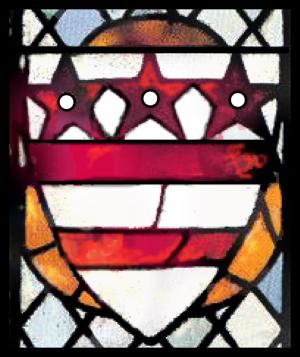
I go to school in Washington, D.C. and I have always wondered about the symbolism behind the D.C. flag. Washington, D.C. is not a state, it is a district under the control of the federal government. Residents of D.C., not those like me who are just passing through, are very passionate about the fight for D.C. statehood. Their license plate has a picture of the flag and the statement "No Taxation Without Representation" a battle cry of early American Revolutionaries. They often use this phrase to describe their plight, as D.C. has no voting representation in Congress. The debate is heated, just last year the mayor was arrested for protesting outside Congress. Throughout all the debate and passion, the D.C. flag remains a strong symbol for residents.

The D.C. flag is based on the design for George Washington's family coat of arms. George Washington picked the location for the capitol city. Not only is D.C. named after George Washington but his influence and reference to him can be seen throughout the city. It makes complete sense that D.C. would chose to also honor George Washington in it's flag, as George Washington was the founder of the city and a fierce fighter for independence.

George Washington Family Coat of Arms